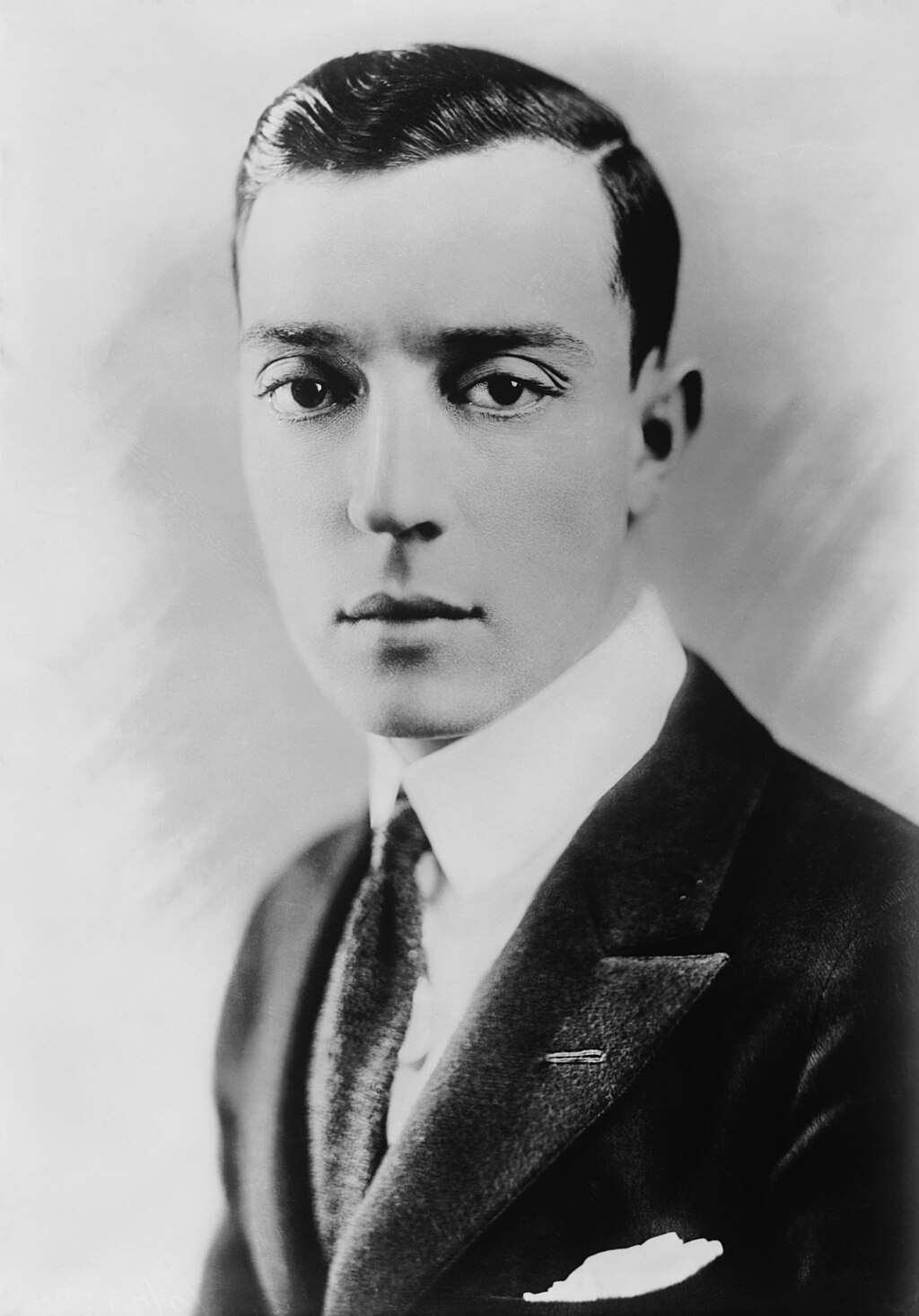
Sherlock Jr. (1924) is widely considered one of Buster Keaton’s finest achievements, a film that showcases his genius as both a physical comedian and a visionary director. A silent comedy with a touch of mystery, Sherlock Jr. is a testament to Keaton’s unmatched ability to blend inventive storytelling, complex stunts, and absurd humor. In just 45 minutes, Keaton delivers a film that is not only one of the best examples of silent cinema but also a groundbreaking work in the history of film. In Sherlock Jr., Keaton stars as a mild-mannered movie projectionist who dreams of becoming a detective. When his fiancée (Kathryn McGuire) is deceived by a thief who steals a valuable watch, Keaton’s character steps into the role of Sherlock Holmes, using his imagination to solve the case. What follows is a series of inventive gags and jaw-dropping stunts, with Keaton using his exceptional physicality and visual storytelling to create one of the most technically impressive and hilarious films of the silent era. Buster Keaton’s Genius: Physical Comedy and Visual Innovation At the core of Sherlock Jr. is Buster Keaton’s incredible talent for physical comedy and his ability to create humor through innovative visual gags. The film is filled with iconic moments that showcase Keaton’s unmatched skills as a stunt performer, including scenes that require impeccable timing, daring physical feats, and extraordinary precision. One of the most famous sequences involves Keaton’s character performing a series of near-impossible stunts, including a complex chase sequence involving a train and multiple costume changes. These stunts are all executed with Keaton’s signature deadpan expression, a key element of his comedic style. Keaton’s ability to perform these intricate stunts while maintaining his expressionless face is a hallmark of his style and a defining feature of his work in Sherlock Jr. Keaton’s use of visual gags is also a standout in the film. The most remarkable example of this is the film’s surreal sequence in which Keaton enters a movie screen, transforming the world around him into a fantastical setting where he interacts with the fictional characters in the film. This groundbreaking use of the film-within-a-film technique was revolutionary at the time and showcased Keaton’s ability to experiment with cinematic form and create a visual language that was ahead of its time. Story and Characters: A Humble Projectionist’s Dream The plot of Sherlock Jr. is simple yet charming, focusing on the protagonist’s aspiration to become a detective while navigating the misunderstandings and comedic mishaps that arise from his ordinary life. Keaton’s character is a projectionist who, in his spare time, dreams of becoming a great detective like his cinematic idol, Sherlock Holmes. When his fiancée is fooled by a thief, Keaton’s character imagines himself as Sherlock Holmes and embarks on a mission to catch the criminal. The film’s humor lies not just in the physical stunts but also in the absurdity of the situations Keaton’s character finds himself in. His character is a naive, yet determined figure who, despite his clumsiness and missteps, manages to solve the mystery in the most comedic and unlikely way possible. The contrast between his quiet, unassuming nature and the bold detective he imagines himself to be drives much of the humor, and Keaton’s performance in the role is both endearing and funny. Innovative Use of Special Effects and Cinematic Techniques Sherlock Jr. is also notable for its innovative use of special effects, which were groundbreaking for their time. One of the most impressive techniques in the film is the seamless use of double exposures and miniatures to create the illusion of Keaton interacting with the movie screen. In one scene, Keaton finds himself on a film set, where the laws of physics and reality bend in humorous ways. This sequence, which involved a combination of visual tricks and meticulously planned stunts, remains one of the most iconic moments in Keaton’s career. Keaton’s use of visual effects is not limited to these surreal sequences. Throughout the film, he employed practical effects—such as clever camera angles and precise timing—to create the illusion of impossible stunts and situations. These techniques demonstrated Keaton’s forward-thinking approach to filmmaking, making Sherlock Jr. not only a comedic gem but also a film that pushed the boundaries of what was possible in cinema. Legacy and Critical Acclaim At the time of its release, Sherlock Jr. was not a major box office success, but its reputation grew significantly over the years. The film’s technical achievements, along with Keaton’s timeless comedic style, ensured that Sherlock Jr. would eventually be recognized as one of the greatest films of the silent era. In 1991, Sherlock Jr. was selected for preservation in the United States National Film Registry by the Library of Congress, honoring its cultural, historical, and aesthetic significance. In 2000, it was ranked #62 on the American Film Institute’s list of AFI’s 100 Years... 100 Laughs, solidifying its place in the pantheon of American cinema. Critics have consistently praised Sherlock Jr. for its innovative use of visual effects, its impeccable comedic timing, and its charming lead performance by Keaton. The film’s influence on later filmmakers is immeasurable, with many citing Keaton’s work in Sherlock Jr. as a key inspiration in their own careers. David Thomson described it as "a breakthrough," highlighting its status as a key moment in Keaton’s career and in the history of film comedy. Conclusion: A Timeless Masterpiece of Silent Comedy Sherlock Jr. (1924) is one of the most brilliant achievements of Buster Keaton’s career and remains a defining work of silent cinema. The film’s innovative use of special effects, its incredible physical comedy, and Keaton’s remarkable performance ensure that it has stood the test of time as one of the finest examples of comedy ever made. Sherlock Jr. is a film that continues to entertain audiences and inspire filmmakers, proving that the art of silent film comedy is as relevant and exciting today as it was nearly a century ago. For fans of silent cinema, slapstick comedy, or anyone interested in the genius of Buster Keaton, Sherlock Jr. is an essential viewing experience. It is a film that not only captures the spirit of its time but also continues to stand as a timeless example of cinematic innovation and comedic brilliance.

-67db039ec6b30.jpg)